
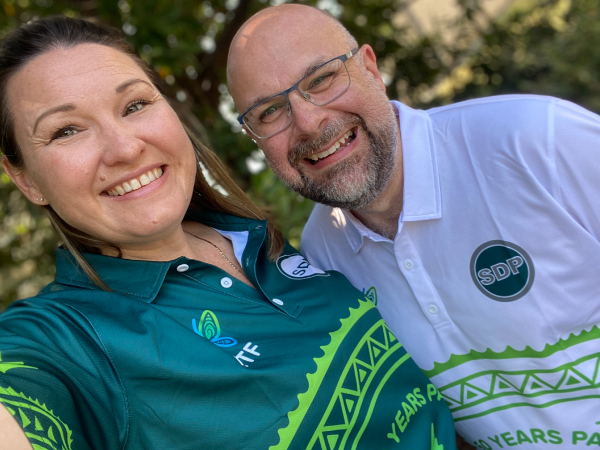
A few years back, I was researching a company online for a new kitchen.
Everything looked spot on.
Great reviews.
Beautiful photos of their work.
Clean, polished, professional.
I felt pretty confident walking in.
Then I got there.
There was an old ute out the front with faded, peeling signage.
The building sign looked like it hadn’t been touched in over a decade.
And none of it matched the business I thought I was walking into.
Then I stepped inside.
The office felt like it belonged to another era.
Cluttered. Worn. Like nothing had really been updated in years.
And the team… they looked how the place felt.
Tired.
Flat.
Wearing uniforms that looked as worn out as the space around them, mismatched and creased, like an afterthought rather than something they felt proud to put on.
And just like that, everything shifted.
When people think about branding, they usually think about customers first. How the business looks. What impression it makes. Whether the website or signage feels professional.
But there is another side to professional presentation that often gets overlooked.
It affects your team.
The way your organisation shows up through uniforms, vehicles, signage and the workplace itself shapes how your people feel day to day. And that feeling shows up in how they speak, how they serve, how they represent the organisation and how proud they feel to be part of it.
Because presentation does not just shape perception externally.
It shapes behaviour internally.
Presentation shapes perception from the inside out
People notice when a workplace feels considered.
Clean, well-designed signage in reception.
Uniforms that are consistent and actually worn with pride.
Vehicles that look sharp and clearly connected to the organisation.
A space where everything feels like it belongs together.
These details send a message to the outside world, but they send an even stronger message to your team.
They say:
We are professional.
We are organised.
We care about how we show up.
This place has standards.
And people respond to that.
When a workplace feels patchy, dated or inconsistent, it does not just affect appearances. It drags on energy over time.
When it is cohesive and considered, the opposite happens. People lift. They take more pride. They show up differently.
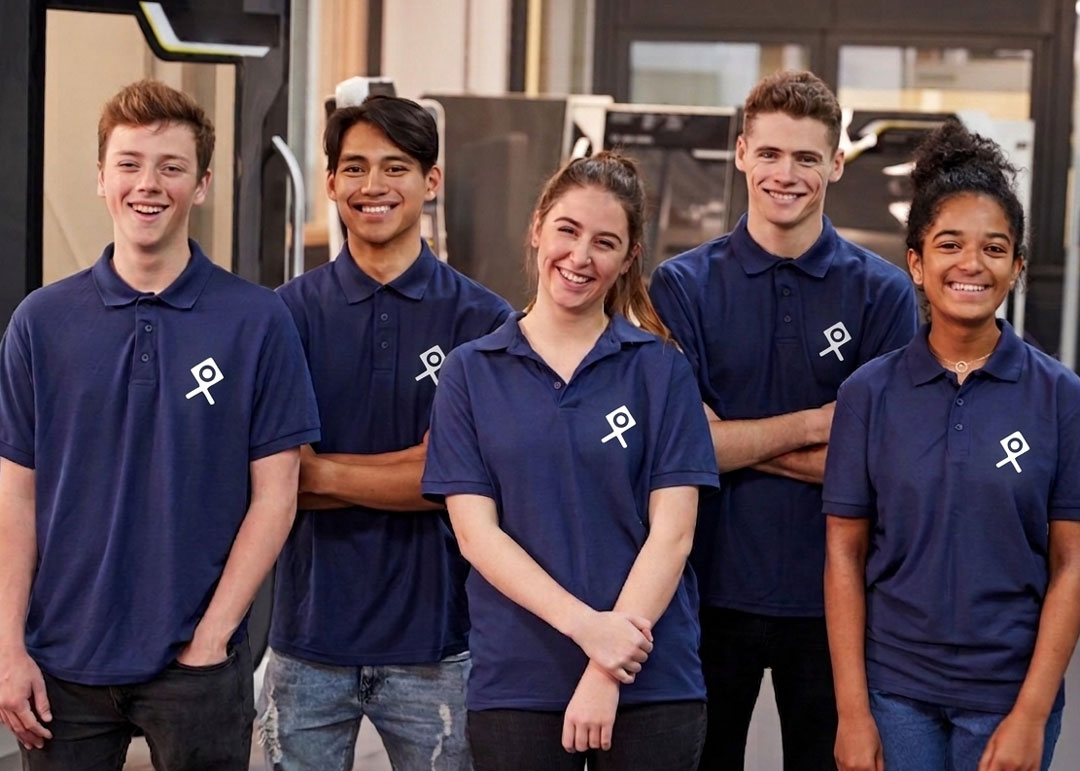
Uniforms do more than make people look the part
A uniform is not about making everyone look the same. It is about creating consistency and confidence.
For client-facing teams, that shift is obvious.
When staff show up in clear, well-presented uniforms, they carry themselves differently. They look prepared. They feel legitimate. They know they are representing something established.
Not just turning up in whatever was clean that morning.
Flip that, and the impact is just as real.
When uniforms are inconsistent, worn or feel like an afterthought, it shows. People feel less put together. Less confident. Less certain about how they are being perceived.
And clients pick up on it instantly.
Uniforms remove friction. They make it easy to identify who works there, who to approach and who to trust.
Internally, they create a shared standard. A sense of being part of something, not just working somewhere.
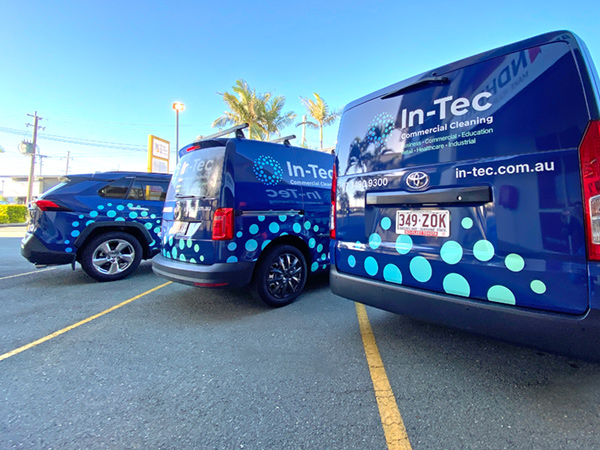
Vehicles become mobile confidence-builders
Branded vehicles are often treated as marketing.
They are. But that is only part of the story.
They also shape how your team feels.
When someone drives a vehicle that is clean, well-signed and clearly part of a professional brand, it changes how they arrive. It reinforces that they are part of something credible.
That confidence carries into every interaction.
And it is noticed immediately by the person meeting them.
Consistency across vehicles, signage, digital presence and printed materials does not just help people recognise your brand.
It helps your team believe in it.
Signage shapes the environment your team works in
Signage is often treated as functional.
A sign on a wall.
A logo on a building.
A wayfinding panel in a hallway.
But it does more than direct people. It defines the space.
Good signage makes a workplace feel clear, intentional and current. It signals that the business cares about the details.
And that matters.
Because when a space feels looked after, people are more likely to look after it and take pride in being part of it.
Professional presentation builds real pride
Pride is not built through big moments.
It is built through small, consistent signals.
The logo on the front door.
The quality of the uniforms.
The way everything from vehicles to forms to signage feels connected.
The fact that the space feels current, not stuck in another era.
The sense that what is presented externally matches what is happening internally.
On their own, these things feel minor.
Together, they shape how people feel about where they work.
And people who feel proud show up differently. They communicate better. Engage more. Represent the organisation with more confidence.
Confidence is contagious
When people feel good about where they work, it shows.
In conversations with clients.
In how they carry themselves on site.
In how they talk about the business to others.
In how new staff experience the organisation from day one.
It creates a ripple effect.
A team that feels proud speaks positively.
A team that feels well represented represents the business well.
A team surrounded by consistency behaves consistently.
That is why branding is not surface level.
Done properly, it is a practical tool for building confidence from the inside out.
Where to start
You do not need to fix everything at once.
Start with what your team sees and uses every day:
Are your uniforms something people feel good wearing?
Do your vehicles reflect the quality of your work?
Does your signage feel current or dated?
Does your environment feel aligned or disconnected?
If things feel off, it does not mean the brand is broken.
It usually means it is out of sync.
And often, a few focused changes across key touchpoints can shift both team confidence and public perception quickly.
Final thought
Your brand is not just for the people outside your organisation.
It is for the people inside it.
Because when everything lines up, uniforms, signage, vehicles and environment, it creates something powerful.
A team that does not just look professional, but feels it.
And that kind of confidence is hard to fake.
It shows up in how people stand, how they speak and how they represent what they do.
It is the difference between a business that looks good online…
…and one that still feels right the moment you walk through the door.