
Think back to the schools you remember most clearly.
Chances are, it wasn’t only the classrooms, teachers or playgrounds that stayed with you. It was the feeling of the place. The colours. The messages on the walls. The way the environment made you feel when you walked through the gates.
Schools are more than buildings. They’re places where students spend a huge part of their lives, forming friendships, building confidence and discovering what they’re capable of.
Good signage can support that experience in ways people often underestimate.
It can help students feel welcome, connected and proud of where they learn. And when it’s designed well, it can turn an ordinary school environment into one that feels purposeful, positive and inspiring.
School Signage Does More Than Give Directions
At a basic level, signage helps people find classrooms, offices, libraries, sports facilities and other important areas. That practical role matters, especially on larger campuses where students, parents and visitors need clear guidance.
But school signage can do much more than point left or right.
It can reinforce values, celebrate achievement and bring the school’s identity to life. A well-designed sign can remind students what their community stands for, while thoughtful environmental graphics can make the campus feel more engaging and memorable.
The best school signage is useful, but it also contributes to the atmosphere of the space.
A Strong Welcome Sets the Tone
The entrance is one of the most important areas of any school.
It’s where new students arrive on their first day, where parents form their first impression and where visitors begin to understand the character of the school.
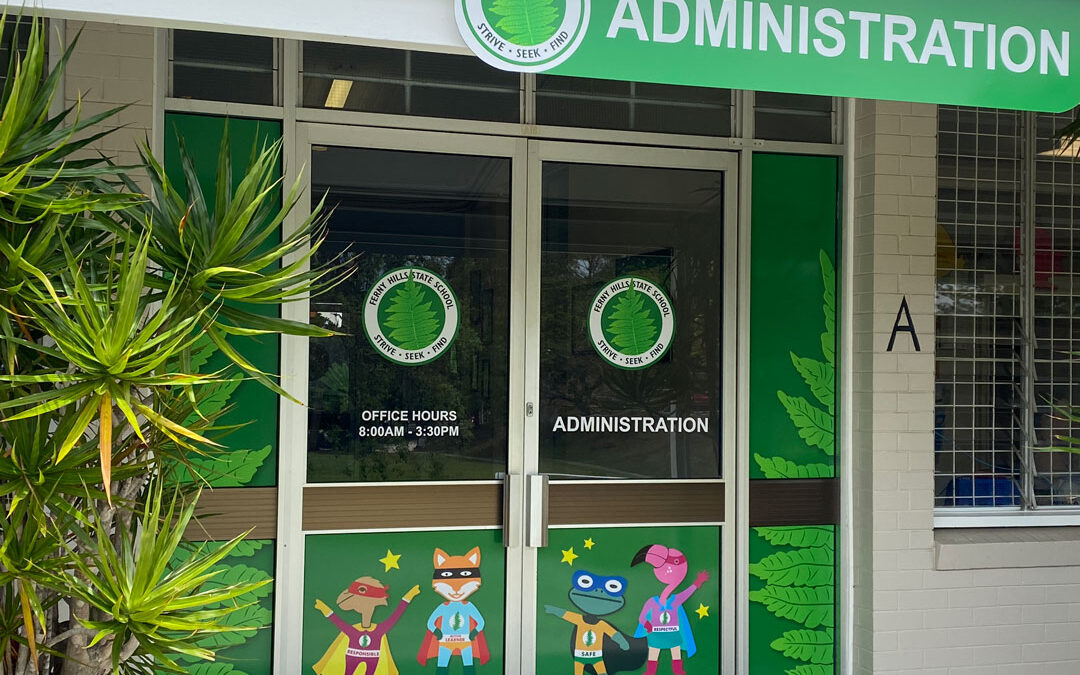
Clear, professional entrance signage helps the campus feel organised and welcoming. It reassures people that they’re in the right place, while strong branding gives the school a sense of identity from the moment they arrive.
That first impression can be especially important for younger students or families entering an unfamiliar environment. A warm, well-designed entrance can make the experience feel less intimidating and more inviting.
Signage Can Reinforce School Values
Most schools have a set of values they want students to understand and demonstrate. Respect, resilience, curiosity, kindness and responsibility are common examples.
Too often, those values appear on one poster in the administration office and are barely noticed again.
Signage gives schools the opportunity to make those ideas part of the everyday environment. Values can be incorporated into wall graphics, corridor displays, outdoor spaces and shared learning areas, where students see them regularly.
The goal isn’t to cover every surface with slogans. It’s to place meaningful messages where they naturally support the culture the school is trying to build.
Inspiring Spaces Encourage Engagement
The physical environment affects how students experience a space.
A bare corridor may be functional, but it rarely creates much energy. Add colour, school stories, student artwork or educational graphics, and the same area can become more engaging.
Signage can help transform libraries, STEM areas, music rooms, sports zones and breakout spaces into places with their own identity. It can create excitement around learning and make different parts of the school feel purposeful.
Even small changes can have an impact. A well-designed quote wall, house display or timeline of school achievements can give students something to connect with as they move through the campus.
Celebrating Students Builds Pride
Schools are filled with stories worth sharing.
Academic achievements, sporting success, creative work, leadership roles and community contributions all deserve recognition. Signage and display systems can help celebrate those accomplishments in a way that feels visible and lasting.
This might include honour boards, achievement walls, house graphics or rotating displays featuring student work.
When students see themselves and their peers represented in the school environment, it strengthens their sense of belonging. It shows that effort is noticed and that contribution matters.
Recognition should not be limited to the highest achievers either. A thoughtful signage strategy can celebrate participation, improvement, teamwork and character alongside traditional awards.
Good Wayfinding Reduces Stress
Schools can be confusing places, particularly for new students, families and visitors.
Poor wayfinding creates unnecessary frustration. People arrive late, interrupt classes to ask for directions or wander through spaces they shouldn’t need to enter.
Clear directional signage makes the campus easier to navigate. Consistent colours, icons and naming systems can help people understand where they are and where they need to go without relying on constant assistance.
For students, that clarity supports independence. For staff, it reduces interruptions. For visitors, it makes the school feel more organised and easier to deal with.
Good wayfinding often goes unnoticed, which is usually a sign that it’s working.
Design Should Reflect the School Community
Every school has its own character.
A small rural primary school may want signage that feels warm, playful and connected to the local community. A large secondary college may need something more structured, contemporary and mature.
There is no single design style that suits every campus. The colours, imagery, language and materials should reflect the students, the school’s values and the surrounding environment.
This is particularly important when incorporating cultural stories, local history or community identity. These elements should be handled thoughtfully and, where appropriate, developed in consultation with the people they represent.
The strongest signage feels like it belongs to the school, rather than something copied from somewhere else.
Consistency Helps the Campus Feel Connected
Many schools develop signage gradually over time.
A new building gets one style. The sports area gets another. Temporary signs remain in place for years. Before long, the campus can feel visually disconnected.
A clear signage system brings those different areas together. Consistent fonts, colours, symbols and materials help every sign feel like part of the same school identity, even when different buildings serve very different purposes.
Consistency also improves navigation. Once students and visitors understand the visual system, they can follow it more easily across the campus.
A school does not need every sign to look identical. It simply needs them to feel related.
Durability Matters in Busy School Environments
School signage needs to work hard.
It may be exposed to sun, rain, constant foot traffic, sporting equipment and the occasional backpack collision. Outdoor signs need to remain readable in changing weather, while internal graphics must withstand regular cleaning and daily use.
Choosing the right materials and finishes is essential. A design may look impressive on screen, but if it fades, scratches or peels quickly, it will soon undermine the environment it was meant to improve.
Durable signage protects the school’s investment and keeps the campus looking cared for over time.
Students Should Be Part of the Conversation
Some of the most meaningful school signage projects involve students in the process.
They may contribute artwork, help develop themes or share ideas about what they want their environment to say. This creates stronger ownership and can lead to signage that feels more relevant to the people who use the space every day.
Student involvement needs structure, but it can add genuine personality. It also turns the project into a learning opportunity, showing students how design, communication and community identity come together.
When students help shape a space, they are more likely to feel connected to it.
Final Thought
Good school signage does not simply label buildings or decorate walls. It helps shape how students experience their environment.
It can make a campus easier to navigate, strengthen school pride and reinforce the values that matter most. It can celebrate achievement, support belonging and create spaces that feel more welcoming and inspiring.
The most effective school signage is clear, consistent and designed with the community in mind. It reflects the character of the school while helping students feel that they are part of something meaningful.
Take a walk through your campus from a student’s point of view. Look at what they see, where they feel uncertain and which spaces could tell a stronger story. That’s often where the best signage opportunities begin.