
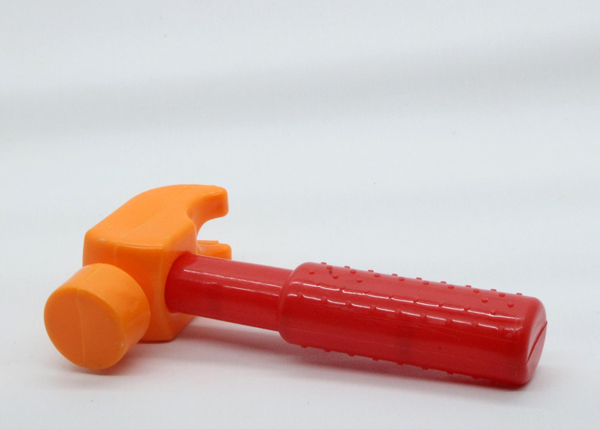
When I bought my first home, a small townhouse, I decided it was time to be a responsible adult and own some tools.
So I bought a tool wallet.
Not a toolbox. A wallet. Slim. Compact. Very optimistic.
Inside it were a few basics and a screwdriver that was far better suited to fixing spectacles than tightening door hinges. At the time, it felt sufficient. The place was small. The needs were simple. I convinced myself this was all I would ever need. I was teased mercilessly by my friends for this completely inadequate form of hardware.
Fast forward to buying our first large family home, and reality arrived quickly. Bigger space. Bigger jobs. Bigger expectations.
The tool wallet did not cut it. I upgraded to a proper toolbox and didn’t look back.
Marketing works the same way. You need the right tools for the job.
Small Needs Require Simple Tools. Growth Changes the Game.
In the early stages of a business, you can get by with very little. One flyer. A basic card. A simple document you reuse for everything.
But as your business grows, your marketing needs change.
You meet more people. You have more conversations. You need tools that support those interactions properly, not ones that almost do the job.
A marketing toolkit is not about having everything. It is about having the right physical tools for where your business is now.
Business Cards
Still essential, still misunderstood
Business cards are not outdated. They are just often badly used.
A good business card supports recall after a conversation. It does not try to sell. It does not try to explain everything.
Strong business cards:
- Make it easy to remember who you are
- Prioritise name, role, and contact details
- Reflect the brand clearly and consistently
Think of them as a handshake you leave behind.
 Flyers
For focus, not volume
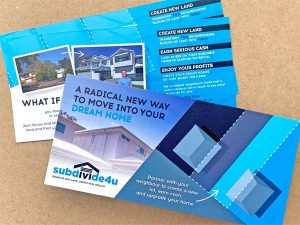
Flyers work best when they do one job well.
They are useful when they deliver value to their reader. A laundry-list of services is not only boring, it screams “me, me, me!”
Effective flyers:
- Focus on one clear message
- Offer valuable tips or advice
- Are easy to update as things change
If a flyer needs explaining, it is doing too much.
 Brochures
When explanation matters
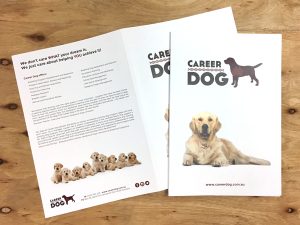
Brochures are useful when your services need context or structure.
They allow you to guide someone through what you do in a considered way, especially when multiple services or steps are involved.
Good brochures:
- Are structured and easy to scan
- Avoid jargon and filler
- Help people understand, not persuade
They should feel helpful, not heavy.
 Company Profiles and Capability Statements
Confidence builders, not sales pitches
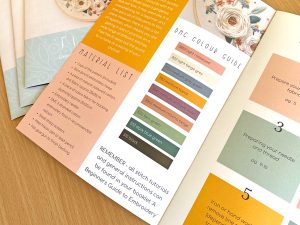
Profiles and capability statements are working documents.
They are often shared in meetings, emailed as PDFs, or used to support procurement and decision-making. Their job is to reduce uncertainty.
Strong profiles:
- Clearly explain what you do
- Highlight relevant experience
- Feel calm, credible, and current
They are not about saying everything. They are about saying the right things.
 Presentation Folders
Quietly doing a lot of work
Presentation folders often get overlooked, but they play an important role.
They pull everything together. They create structure. They help your materials feel considered and complete.
Used well, presentation folders:
- Elevate meetings and proposals
- Keep information organised
- Reinforce professionalism without saying a word
They are especially useful when multiple documents are involved.
The Toolkit Principle
Just like tools, printed marketing materials should match the job.
You do not need every printed item available. You need the ones that support how you actually market and sell your business.
A small business may only need a few well-designed essentials. A growing business often needs a broader toolkit that feels intentional and aligned.
The mistake is holding onto the tool wallet when you really need a toolbox.
Final Thought
Printed marketing materials are not about nostalgia or tradition.
They are practical tools for real-world interactions. When chosen well, they support conversations, build confidence, and make your business easier to understand.
Start with the essentials. Upgrade as your business grows. And make sure every item in your toolkit earns its place.