
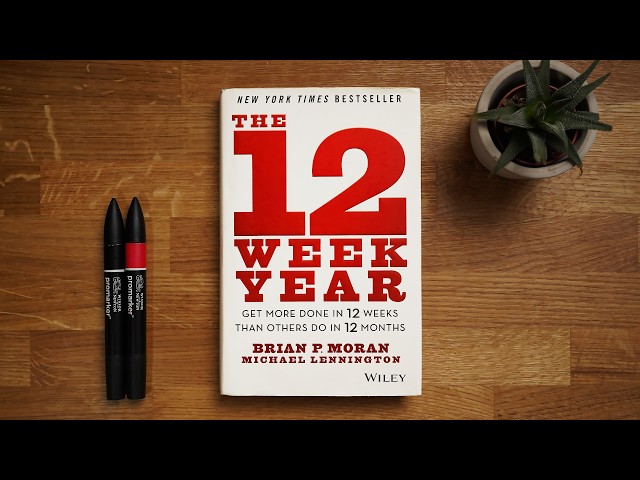
I have been re-reading The 12 Week Year recently, and it has been reshaping how I think about planning, focus, and execution in business.
The central idea of the 12 Week Year is simple. A year is a long time. When goals sit twelve months away, urgency fades and accountability softens. Plans exist, but execution drifts.
Instead of planning in twelve month blocks, the 12 Week Year treats twelve weeks as a full planning cycle. Goals are shorter, clearer, and far harder to ignore. The result is better focus and more consistent execution.
This way of thinking has real relevance for marketing.
Why Long-Term Marketing Plans Often Struggle
At the start of the year, many businesses set broad marketing goals.
Improve the brand.
Be more visible.
Get more consistent.
They are well intentioned, but they are also distant. When the finish line is far away, it is easy to stay busy without being deliberate.
Marketing becomes a collection of activity rather than a focused effort. Things start, stall, and restart later.
This is rarely a motivation issue. It is a planning issue.
Why December Feels Too Far Away
December is so far off it almost feels abstract.
There is plenty of time to refine the plan later. Plenty of room to delay decisions. Plenty of chances to reset when things calm down.
That distance quietly removes urgency. Marketing slips down the priority list, not because it is unimportant, but because it does not feel immediate.
The 12 Week Year removes that distance.
How the 12 Week Year Changes Marketing Planning
By compressing the planning horizon to twelve weeks, priorities become sharper.
Instead of asking where marketing should be by the end of the year, the question becomes simpler and more practical.
What should marketing achieve in the next twelve weeks.
This shift creates:
- Clear focus
- Stronger decision-making
- A direct link between planning and action
Marketing stops being a background task and becomes an intentional business function.

What a 12 Week Marketing Reset Looks Like
A marketing reset does not need to cover everything.
Trying to fix brand, website, content, social, and campaigns all at once usually leads to overwhelm.
A twelve week focus encourages restraint.
It asks:
- What needs to be clarified first
- What will make the biggest difference right now
- What progress is realistic in the next twelve weeks
This creates momentum without burnout.
Why This Builds Marketing Confidence
Shorter cycles create faster feedback.
When marketing is reviewed over twelve weeks rather than twelve months, businesses can see what is working and what is not.
Adjustments happen earlier. Confidence grows through action, not speculation.
Marketing becomes something that is guided and understood, rather than something that feels vague or out of control.
A Better Question to Ask Right Now
Instead of asking what marketing should look like by the end of the year, ask this.
What does success look like for marketing in the next twelve weeks.
That single question brings clarity, focus, and intention into the present.
Final Thought
December is a long way away.
Waiting for the perfect annual plan often delays the clarity that would actually move things forward.
The 12 Week Year offers a simpler alternative. Focus on the next twelve weeks. Plan with intention. Execute with purpose.
That is how meaningful marketing progress is made.
Get the book 12 Week Year here