

We do a lot of websites for trades.
Plumbers. Electricians. Air conditioning companies. Builders. Glaziers. Landscapers. The sorts of businesses doing real, practical, useful work every day.
Towards the end of a website project, we usually ask the client for photos. This is an important step because imagery can completely change how a website feels. The words do the explaining, but the photos bring it to life. They add proof, personality and trust. They make the whole thing feel more real.
And this is often where my heart sinks a little.
Because what comes back?
A photo of an air conditioner.
A photo of a window that has just been installed.
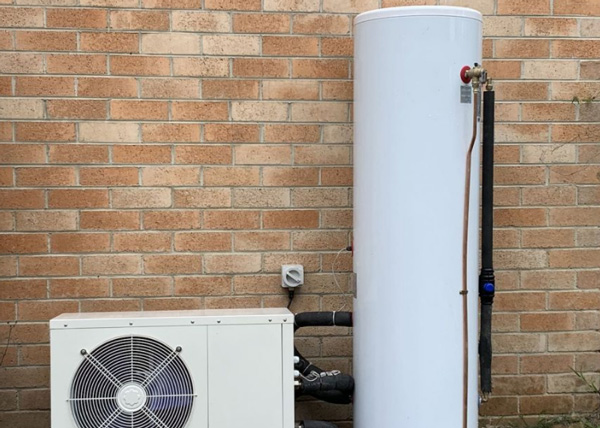
A photo of a hot water system.
A photo of a switchboard.
All technically correct. All relevant. All… not exactly thrilling.
And sometimes, just to keep us humble, there is a Coke can in the background. Or a left-behind tool. Or a bit of packaging. Or someone’s lunch bag sitting proudly in the corner like it paid for a feature spot.
There has to be a better way.
The problem with “thing” photos
The issue is not that these photos are wrong.
If you install air conditioners, yes, people should probably see that you install air conditioners. If you fit windows, showing the finished window makes sense. If you repair hot water systems, a photo of one may have a place somewhere on the website.
But these images should not be doing all the heavy lifting.
Because most customers are not emotionally invested in the equipment itself. They are invested in what the equipment does for them.
They do not want an air conditioner. They want a cool, comfortable home on a sticky afternoon.
They do not want a hot water system. They want a warm shower that does not suddenly turn into an ice bath at 6.30am.
They do not want a new window. They want a brighter room, a better view, less noise, more security, or a home that finally feels finished.
That is the difference.
One image shows the thing. The other shows the result.

People need to see themselves in it
Good website imagery helps your customer imagine life after the job is done.
This is where trades websites have a huge opportunity. A lot of trade businesses are solving problems that people can feel. Heat. Cold. Stress. Leaks. Noise. Mess. Discomfort. Safety concerns. That annoying job they have been putting off for six months and now cannot ignore.
So, show the relief.
A family sitting comfortably in a cool lounge room after an air conditioner has been installed.
Someone enjoying a warm shower after their hot water has been fixed. Tastefully, obviously. No one needs a full shampoo commercial.
A homeowner opening beautiful new windows into a bright, clean space.
A staff member walking through a well-lit commercial site after an electrical upgrade.
A clean, finished bathroom that makes people think, “Yes. That. I want that.”
These images work because they are not just documenting the job. They are selling the better situation your customer wants.
The product still matters, but context matters more
This does not mean every product or installation photo is useless.
A neat close-up of quality workmanship can be powerful. A before-and-after can be brilliant. A finished installation can help prove that you know what you are doing.
But context makes it stronger.
Instead of only photographing the hot water system, step back and capture the neat installation area. Show clean pipework. Show professionalism. Remove the packaging. Move the Coke can. Give the scene two minutes of care before the photo is taken.
Instead of only photographing the new window, show how it improves the room. Let in the light. Capture the clean finish. Show the space people will actually enjoy.
Instead of only photographing the air conditioner on the wall, show the room it is cooling. Show the comfortable home, the relaxed office, the quiet bedroom, the end result.
Small changes. Big difference.
What to photograph instead
Before you take photos for your website, ask yourself, “What does the customer actually want to feel when this job is finished?”
Then photograph that.
For trades websites, useful image ideas include:
- A happy customer in the finished space, where appropriate
- A clean, completed room after the work is done
- Your team arriving professionally, in uniform, with branded vehicles
- A neat worksite that shows care and respect
- Before-and-after shots from the same angle
- Close-ups of quality workmanship, not mess
- People using or enjoying the finished result
- Your team communicating with the customer, not just staring at tools
- Finished work in natural light, with clutter removed
None of this needs to feel fake or staged within an inch of its life. In fact, it should not. The best photos feel natural, clean and believable.
A quick clean-up makes a huge difference
Before taking the photo, pause for ten seconds.
Look at the background.
Is there rubbish in the shot? Move it.
Is there a tool bag sitting in the corner? Shift it.
Is there a reflection of someone awkwardly holding a phone? Try another angle.
Is the photo crooked, dark or taken so close that no one can tell what they are looking at? Take another one.
This is not about pretending the job was done in a spotless fantasy world. It is about presenting your work with the same care you put into doing the job properly.
A good website should make people feel confident about choosing you. Messy photos can quietly chip away at that confidence, even when the workmanship itself is excellent.
Bit unfair? Maybe. Still true.
Your website is not a job diary
A lot of trade photos feel like they were taken for internal records. Proof the job was completed. Proof the unit was installed. Proof the window went in. Useful for the business, but not always persuasive for a customer.
Your website needs something different.
It needs images that help people understand the value of your work quickly. Images that support the text. Images that make the page feel polished, trustworthy and human.
The goal is not just to show what you did.
The goal is to help the customer picture what you could do for them.
The simple test
Before sending photos through for your website, ask:
- Does this show the thing, or the benefit?
- Is the image clean and uncluttered?
- Would a customer understand why this matters?
- Does it make the business look professional?
- Can someone see themselves enjoying the result?
- Is this photo helping the website feel more trustworthy?
If the answer is mostly no, take another photo.
Your future website will thank you. So will your designer, who is probably trying very hard not to make a hot water system look emotionally compelling.
Final thought
A photo of a hot water system tells people you install hot water systems.
A photo of someone enjoying a warm shower tells people why that matters.
That is the shift.
When your website imagery shows the outcome, not just the object, your customer does not have to work as hard to understand the value. They can see the comfort, the relief, the pride, the safety, the ease.
And that is when a simple photo starts doing a much bigger job.