
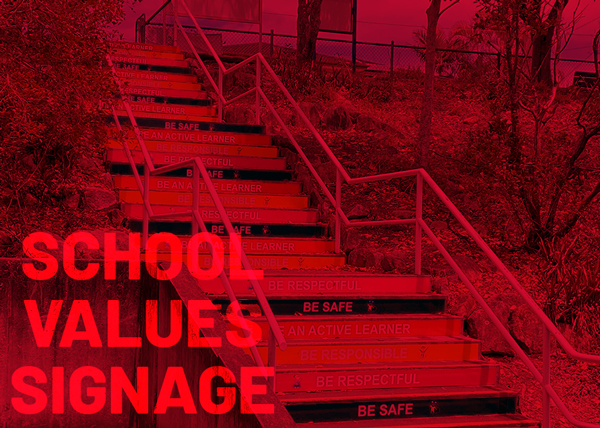
Most schools already do a solid job promoting their values.
They are talked about, displayed, referenced, and reinforced across the campus. Posters are up. Banners are in place. The intent is there.
So this is not about fixing a problem. It is about unlocking an opportunity.
Schools can make their values work harder by treating them less like information and more like a brand of their own.
Values Do Not Compete in a Vacuum
Schools are visually busy environments.
Students are surrounded by instructions, reminders, rules, notices, learning materials, and directional signage every day. In that context, values signage is not ignored because it is missing. It is often ignored because it looks and feels like everything else.
When values are presented in the same visual language as rules and directives, they blend into the background.
To stand out, they need their own identity.
Think of School Values as a Stand-Alone Brand
The most effective values signage systems treat values as a mini brand within the school.
That means giving them:
- A distinct colour palette
- A recognisable visual style
- Characters, mascots, or icons students can connect with
- Consistent layouts and design rules
This does not replace the school brand. It complements it.
By creating a unique look for values, schools help students instantly recognise what the message is about before they even read the words.

Mascots and Characters Create Connection
Students, particularly in primary and middle years, connect far more easily with characters than text.
Mascots, illustrated figures, or recurring visual themes give values personality. They turn abstract words into something relatable and memorable.
Instead of reading a value, students start recognising it.
That recognition is what drives recall and, over time, behaviour.
Placement Matters as Much as Design
Even well designed values signage loses impact if it is placed where students rarely engage.
The most effective signage lives where students naturally gather and pause. Corridors they walk every day. Playgrounds. Eating areas. Libraries. Learning hubs.
When values are part of these spaces, they become part of the daily rhythm of school life rather than background decoration.
Repetition in the right places builds familiarity without feeling forced.
Consistency Turns Messages Into Meaning
When values signage uses the same colours, characters, and visual language across the campus, it starts to feel intentional.
Students begin to associate that look with positive behaviour, shared expectations, and school culture. Over time, the visuals themselves become shorthand for the values they represent.
This is how branding works.
Consistency does not make messages boring. It makes them recognisable.
Final Thought
Schools are already doing the hard work by defining and promoting their values.
The next step is making those values stand out.
By creating a distinct visual identity for values, using engaging design elements like mascots and colour, and placing signage where students actually spend time, values stop competing with other messages and start cutting through.
When values are treated like a brand, they become easier to notice, easier to remember, and easier to live by.