

I’m going to be a little controversial.
I don’t like digital business cards. You know the ones where you scan something and suddenly someone ends up in your phone.
It’s not that I don’t understand the appeal. They’re clever. They’re convenient. And yes, they’re better for the environment, which absolutely matters. We could all do with less paper waste in the world.
But here’s the thing… I don’t want more people in my phone.
More specifically, I don’t want work people in my phone. My phone is for friends, family, group chats, and silly memes. Work connections live somewhere else.
And that small, very human preference says a lot about why business cards still matter.
Not Everything Needs to Live in Your Phone
Digital tools are great, but they come with assumptions.
Scanning a digital business card often means saving a contact, granting access, or creating a connection that feels more personal than the situation actually is. For many people, that is a step too far, too soon.
A physical business card keeps things simple.
It lets someone take your details without committing to anything. No awkward phone handling. No forced follow-up. Just a quiet option to reconnect later if and when it makes sense.
First Impressions Still Happen in the Real World
Despite how digital business has become, many first impressions still happen face to face.
Meetings. Events. Site visits. Introductions through mutual contacts.
In those moments, a business card feels natural. It is quick, polite, and intentional. It respects personal boundaries while still making the connection easy.
That balance matters more than most people realise.
A Physical Card Is a Reminder, Not a Demand
Digital connections are easy to make and easy to forget.
A business card creates a physical reminder. It can sit on a desk, get tucked into a wallet, or resurface days or weeks later when the timing is right.
There is no pressure attached.
The person chooses when to act on it, which makes the interaction feel more respectful and more memorable.
Business Cards Signal Professionalism
A well designed business card quietly communicates that you are prepared and considered.
It shows you have thought about how you present yourself in the real world, not just online. In many industries, especially trades, services, and professional environments, that still carries weight.
Not having a card when one is expected is rarely a deal breaker, but it does remove an opportunity to reinforce credibility.
Design Still Does the Heavy Lifting
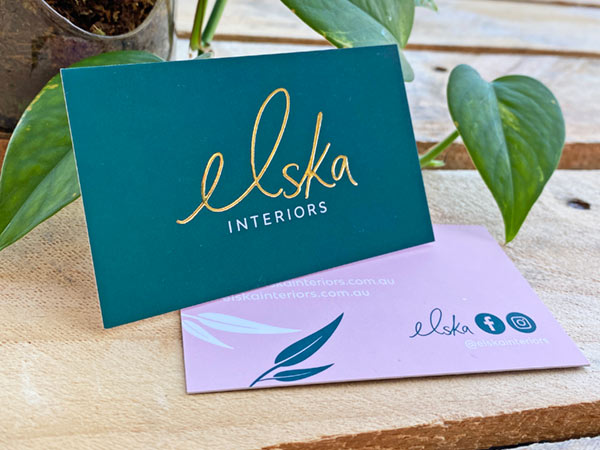
A business card is not just a contact tool. It is a small, physical expression of your brand.
This is where tactile design really matters.
The weight of the card. The texture of the stock. Finishes like raised spot UV, embossing, or soft-touch coatings. These are details people feel before they consciously think about them, and they shape perception fast.
A heavier card with a considered finish signals quality, confidence, and intention. It suggests that you care about how your brand shows up in the real world, not just on a screen.
In a digital landscape where everything looks similar and feels disposable, that physical contrast stands out.
A flimsy card gets handled once and forgotten. A well made card gets noticed, turned over, and kept.
Digital and Physical Can Coexist
This is not an argument against digital tools.
The strongest brands use both.
A business card does not compete with your website, LinkedIn, or online presence. It supports them. It opens the door without forcing the interaction and lets the relationship move forward naturally.
Final Thought
Business cards are not outdated.
They have simply found a more focused role.
In a world where everything competes for attention and access, a physical business card offers something refreshing. Choice. Simplicity. Boundaries.
And sometimes, that is exactly what makes it effective.